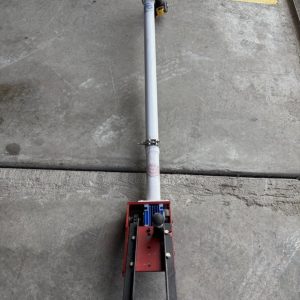
The Aircraft Electric Tow Bar – Mini Max Style offers a space-saving approach to aircraft handling for operators who want powered mobility without purchasing or storing a full-size tug. An Aircraft Electric Tow Bar may improve daily hangar operations by providing controlled powered assistance for moving a compatible aircraft.
The available Electric Tow Bar for Aircraft combines used-equipment value with the convenience expected from compact powered ground-support equipment. As a Used Electric Aircraft Tow Bar, the unit should be evaluated for operating condition, structural integrity, wheel wear, attachment compatibility, drill performance, and charger function before purchase.
The Mini Max Aircraft Tow Bar configuration is particularly attractive to buyers who value compact storage, straightforward setup, portable operation, and practical maneuverability. The included Aircraft Tow Bar with Drill and Aircraft Tow Bar with Charger create a more complete package for users who want equipment that can be prepared for service without sourcing major accessories separately.
As a Portable Aircraft Tow Bar, the unit can be stored more easily than a traditional tug and may be transported between hangars, maintenance areas, or aircraft storage locations. This Powered Aircraft Tow Bar can also serve as an Electric Airplane Tow Bar for compatible light aircraft when the connection method, aircraft weight, nose-wheel arrangement, surface, and operating conditions are suitable.
Within the category of Aircraft Ground Handling Equipment, a compact electric tow bar can provide useful movement capability without the complexity of larger powered machinery. For appropriate aircraft, the unit can combine the roles of Aircraft Hangar Tow Bar, Aircraft Moving Equipment, and portable Electric Aircraft Mover.
Key Benefits of a Mini Max Style Electric Tow Bar
The Aircraft Electric Tow Bar – Mini Max Style provides a convenient middle ground between fully manual movement and investment in a larger dedicated tug. The buyer should assess the complete operating environment because aircraft weight alone does not determine whether the tow bar is suitable.
The smaller configuration can allow closer operator involvement and improved visibility during slow aircraft positioning. A second person may be appropriate when moving an aircraft in congested areas, through narrow hangar doors, or near obstacles.
Electric Tow Bar for Aircraft Benefits
The powered system can make aircraft movement more manageable for operators who find traditional pushing and pulling physically demanding. Potential applications include moving an airplane for maintenance access, hangar entry, cleaning, storage, preflight preparation, or equipment rearrangement.
Ground handling equipment can support safer hangar practices by limiting the need to start an aircraft solely for minor repositioning. The operator should follow the aircraft manufacturer’s towing guidance and avoid exceeding steering, nose-wheel, or tow-point limitations.
Evaluating a Used Electric Aircraft Tow Bar
A Used Electric Aircraft Tow Bar can provide excellent value when it has been operated carefully, stored correctly, and supplied with functioning powered accessories. According to the available description, the tow bar previously moved a Navion and was removed from regular use only because the owner purchased a larger tug.
A detailed visual review can reveal corrosion, cracks, bent components, damaged wheels, loose hardware, worn attachments, or improper previous repairs. An independent inspection by a local aviation professional can provide additional confidence before payment or shipment.
Choosing a Mini Max Aircraft Tow Bar
A Mini Max Aircraft Tow Bar can be particularly useful for private pilots, individual hangar owners, flying clubs, and small aviation businesses. The practical value of the Mini Max style comes from combining powered assistance with direct operator control and a relatively small storage footprint.
A qualified person should review the attachment method and operating geometry before the tow bar is used on an unfamiliar airplane. Operators should inspect the attachment before every use and stop if the unit shifts, loosens, interferes, or behaves unexpectedly.
Benefits of an Aircraft Tow Bar with Drill
The drill-powered configuration may reduce equipment complexity while allowing the operator to remove, charge, replace, or store the power tool separately. The selected drill must remain firmly connected to the drive system and should be inspected for heat, unusual noise, slipping, or excessive load.
Familiarity with the drill response, steering behavior, stopping distance, and reverse control can improve confidence and reduce handling errors. After use, the drill and tow-bar drive should be inspected for heat, wear, looseness, contamination, damage, or abnormal operation.
Choosing an Aircraft Tow Bar with Charger
A complete charging arrangement supports routine readiness by allowing the operator to restore battery capacity after use. Buyers should confirm that the charger operates correctly, matches the battery type, has an undamaged cable, and is suitable for the available electrical supply.
The charger and battery should be stored in a clean, dry, protected location where they cannot be damaged by tools, vehicles, fluids, or hangar traffic. Good battery management is an essential part of dependable operation for any drill-powered aircraft tow bar.
Using a Portable Aircraft Tow Bar
A Portable Aircraft Tow Bar may be transported more conveniently than a full-size tug, depending on its weight, dimensions, and storage configuration. Good transport practices preserve equipment condition and reduce the risk of losing small components that are necessary for operation.
The equipment should not be left where vehicles can drive over it or where fuel, oil, water, cleaning chemicals, or maintenance debris may accumulate. Proper storage and accountability help a portable system remain complete, serviceable, and available when needed.
Powered Aircraft Tow Bar Applications
The equipment can support smooth low-speed movement when the tow bar is compatible, the ground offers sufficient traction, and the operator uses gradual control inputs. Performance should be judged under realistic aircraft load rather than by observing the drive system running without resistance.
Operators should use slow speeds near hangar doors, walls, parked vehicles, tools, support stands, people, and other airplanes. The operator should never rely exclusively on the tow bar to hold an aircraft stationary on an incline.
Electric Airplane Tow Bar Operation
An Electric Airplane Tow Bar can be useful for general aviation aircraft stored in private hangars, maintenance facilities, shared buildings, and airport storage areas. Aviation maintenance personnel can help evaluate whether the tow connection is appropriate and whether the aircraft manufacturer permits the intended method.
Even a small floor obstruction can affect the tow bar’s wheels, alter steering, or create an abrupt load on the aircraft connection. When several people share the equipment, each person should receive consistent operating instructions and understand the applicable aircraft limitations.
Aircraft Ground Handling Equipment Selection
Aircraft Ground Handling Equipment should be selected according to aircraft type, weight, towing arrangement, movement frequency, surface condition, hangar layout, and available storage. A lower initial price does not always represent better value if the unit requires unavailable adapters, weak batteries, repairs, or extensive modification.
Keeping maintenance records can help owners monitor recurring wear and confirm when wheels, batteries, attachments, bearings, or drive components were serviced. Preventive maintenance is generally easier and less costly than dealing with equipment failure while an aircraft is partially moved.
Aircraft Hangar Tow Bar Operations
The ability to reposition an airplane conveniently can improve hangar organization and simplify access to doors, storage, tools, and maintenance areas. Floor markings or visual reference points can help operators stop the aircraft in a consistent location without approaching walls too closely.
The user should avoid distractions, phone use, conversations, and unnecessary activity while the aircraft is moving. Any damage, unusual behavior, weak battery performance, slipping, or attachment concern should be documented before the next operation.
Maintaining Aircraft Moving Equipment
A drill-powered tow bar may provide an efficient balance of portability, simplicity, affordability, and useful towing assistance. Buyers should consider the heaviest realistic aircraft configuration rather than relying only on empty-weight information.
The landing gear and get more info steering system should be handled within published limitations to prevent excessive rotation, binding, or structural stress. The tow equipment should be removed from service if it shows cracks, severe corrosion, bent structure, damaged controls, unreliable power, or an insecure aircraft connection.
Choosing an Electric Aircraft Mover
The compact system may be ideal for private aircraft handling where movement distances are short and surfaces are generally smooth and level. Operators should recognize signs of overload, including drill strain, repeated stopping, wheel slip, excessive heat, slow movement, unusual noise, or attachment distortion.
The drill and charger can be maintained separately, and compatible batteries may be replaced when capacity declines. Long-term reliability depends on maintaining both the mechanical towing assembly and the removable electrical power equipment.
Aircraft Mobility Equipment Applications
Aircraft Mobility Equipment can support private ownership, restoration work, maintenance inspections, aircraft sales, cleaning, and shared hangar management. A Mini Max-style tow bar can be particularly useful where the operator values portability and direct control more than long-distance towing or commercial capacity.
Equipment should be labeled with compatible aircraft, attachment instructions, operating limits, battery requirements, and inspection responsibilities when used by multiple people. Owners should review equipment needs whenever the aircraft, hangar, ramp surface, storage location, or operating routine changes.
Maintaining a Light Aircraft Tow Bar
The Mini Max-style configuration can be an attractive choice when the aircraft and operating conditions fall within its practical capabilities. A trial fit should be completed without applying substantial force, and any interference should be corrected before operation.
If movement requires unusually high power, the operator should stop and inspect the airplane, surface, tow connection, and equipment. Any uncertainty about capacity, condition, compatibility, or operation should be resolved before the aircraft is attached.
Maintenance and Long-Term Care
Maintenance requirements may be simple compared with a full-size tug, but the unit should not be treated as maintenance-free equipment. Heavy use, steep ramps, high aircraft loads, contaminated floors, and frequent direction changes may increase wear on wheels, drive parts, fasteners, and attachments.
- Examine all high-load areas and stop using the equipment if any component appears weakened, distorted, loose, or unreliable.
- A short functional test can reveal electrical or drive concerns before the aircraft is connected and positioned near obstacles.
- Document any operating concern, missing component, damage, repair, or maintenance requirement before returning the equipment to service.
Buying the Aircraft Electric Tow Bar – Mini Max Style
The Aircraft Electric Tow Bar – Mini Max Style offers an appealing combination of powered operation, portable design, direct control, and included accessories. The unit should be judged according to complete operating readiness rather than appearance or purchase price alone.
Whether operators are sourcing an Electric Aircraft Mover, Aircraft Mobility Equipment, or Light Aircraft Tow Bar, safe attachment, adequate capacity, and responsible maintenance remain essential. With realistic expectations, responsible handling, and consistent equipment care, this Mini Max-style tow bar can deliver meaningful value to aircraft owners and aviation facilities.